Flower Line Venti Cup Wrap SVG for Graphics & Crafts
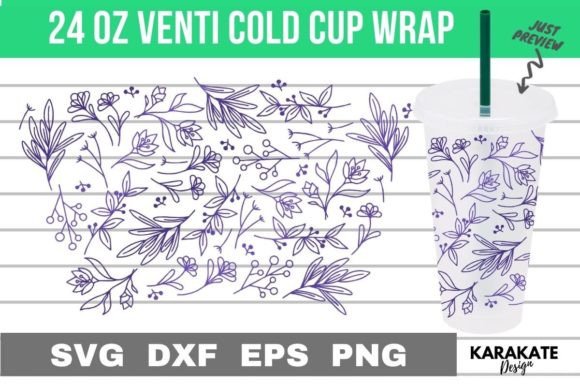
When I first opened the Flower Line, 24 Oz Venti Cup Wrap SVG, I immediately felt its quiet, botanical elegance. The line work is delicate without being fragile, each petal and stem drawn with a confident, continuous stroke that feels both modern and timeless. It’s the kind of design asset that whispers rather than shouts, making it a surprisingly versatile tool for branding projects that need a soft, organic touch. The high-resolution PNG with transparent background gave me a clean preview, and the included vector files told me this would be easy to manipulate for commercial use.
The Mood This Floral Line Art Creates
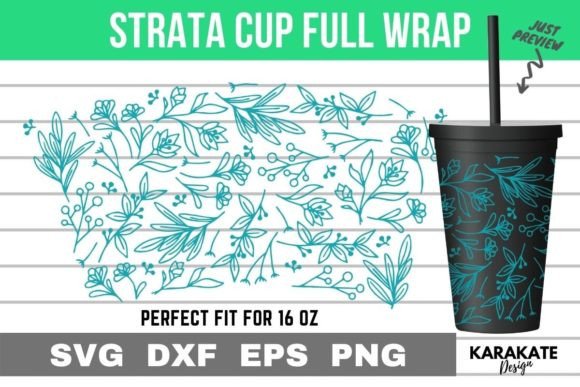
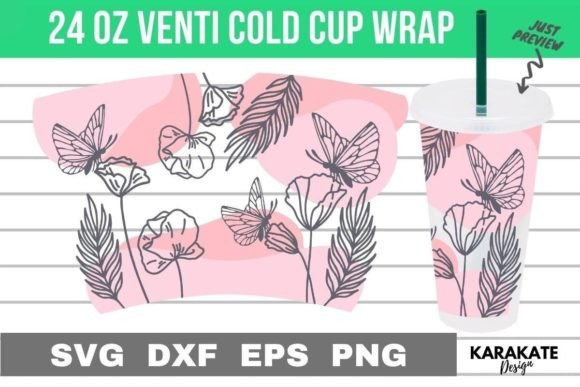
The Flower Line design strikes a chord between artisanal simplicity and refined minimalism. It avoids the heavy, overly detailed botanical illustrations that can crowd a composition, instead offering an airy, almost hand-sketched rhythm. This makes it ideal for brands that want to feel approachable, natural, and slightly premium. On a 24 oz venti cup mockup, the wrap feels like a custom illustration commissioned for a boutique tea shop, a small-batch soap maker, or a wedding favor label. The thin, even lines suggest a hand-drawn sensibility without veering into messy or rustic territory.
Matching the Asset to a Real Client Concept
I evaluated this set through the lens of a client project—a local cold brew brand launching a seasonal floral blend. Their packaging needed a wrap that could bridge earthy authenticity and shelf appeal. The Flower Line asset delivered exactly that. Its botanical motif instantly communicates freshness, while the clean line style keeps it from looking like a clipart cliché. For an Etsy seller designing custom cup wraps, this SVG would serve as a ready-to-print foundation, easily recolored to match brand palettes, layered over kraft paper textures, or combined with a subtle gold foil effect in a product mockup.
Where the Design Performs Best in Practical Projects
In my tests, the Flower Line, 24 Oz Venti Cup Wrap SVG shone brightest in applications where it could occupy generous visual space. On a cup wrap, it’s obviously the hero; the 24 oz format gives it enough real estate to show off the intricate line details without shrinking into a blur. Beyond packaging, I found it highly effective as a decorative accent on product labels, poster backgrounds, social media story templates, and even as a repeating pattern for fabric or tote bag mockups. For Cricut users, the SVG’s clean, closed paths cut beautifully when I tested it on permanent vinyl, creating a crisp, weed-free stencil for glass etching or mug personalization.
It also works well as a supporting brand element. Place a small cluster of the line art in the corner of a website header, or use the PNG version as a subtle overlay on blog post graphics—it adds a cohesive, handcrafted feel without dominating the hierarchy. In print-on-demand scenarios, the EPS file allowed me to scale the design to blanket sizes without any loss of fidelity, and the DXF format was a lifesaver for a crafter who needed to import it into older cutting software.
When to Use This Asset Carefully
Despite its flexibility, the Flower Line design is not a universal solution. The thin strokes demand respect for contrast. On a dark background, especially a rich espresso or charcoal, the lines can fade unless you thicken them or switch to a lighter, metallic ink. I recommend always testing the SVG on both light and dark mockups. In black-and-white mode, the design holds its own, but at very small sizes—like a one-inch sticker or a social media icon—the flower details can become a indistinct web. For corporate materials that need serious, structured geometry, this whimsical line art might feel out of place.
Furthermore, if you plan to layer the design over a busy photograph or a textured pattern, the visual hierarchy can break down. I’d reserve it for clean, uncluttered backgrounds or use it as a standalone decorative element, not as a supporting texture behind text. For minimalist branding that relies on negative space, the floral motif might overpower the intentional emptiness, so use it sparingly as a small accent rather than a full-wrap statement.
Pairing the Flower Line with Typography
One of the most rewarding parts of working with this asset is playing with font pairings. I tested the Flower Line cup wrap SVG against a variety of typefaces, and a few combinations stood out. A delicate serif font like Cormorant or Playfair Display amplifies the vintage, botanical feel without clashing. For a more modern, artisanal vibe, a light sans-serif such as Lato or Montserrat in uppercase creates a clean, contemporary contrast. If you’re going for a romantic, wedding-inspired look, a flowing script font—like Great Vibes or Dancing Script—echoes the organic curves of the line art. Avoid heavy, geometric display fonts; they can visually crush the fine details and make the design feel unbalanced.
File Technicalities and How They Impact Workflow
From a production standpoint, the package delivers exactly what a professional designer needs. The 1 SVG file is well-structured, with clean, editable paths that I could easily recolor, resize, and even separate into individual floral elements. The 1 EPS file is a solid backup for those working in older versions of Adobe Illustrator or CorelDRAW. The 1 DXF file is particularly valuable for crafters using Silhouette Studio or similar software that prefers DXF over SVG for cutting. And the 1 PNG file, at 300 DPI with a transparent background, is instantly usable for quick mockups, Canva templates, or digital ads without any conversion hassle.
I always inspect the PNG edges for anti-aliasing artifacts, and here they were clean. The transparency is true, so overlaying it on colored backgrounds didn’t produce any white halos. For sublimation printing, the high resolution means you can stretch the design to fit a 24 oz cup wrap template without pixelation, and the vector formats guarantee sharp output on even the largest sublimation blanks.
Testing the SVG for Vinyl Cutting and Print
When I ran the SVG through Cricut Design Space, the import was smooth. The lines are thick enough to cut reliably, and the design is grouped logically, so you can ungroup and isolate individual flowers if you want to create a smaller, partial wrap. I suggest doing a test cut on cardstock before committing to expensive vinyl, just to confirm that your blade settings align with the delicate strokes. For print projects, the EPS file embedded correctly in InDesign, and I experienced no font or transparency issues when exporting to a press-ready PDF.
The Commercial License Question Every Designer Should Ask
Before placing this asset in a client project, I always verify the commercial licensing terms. The product description doesn’t explicitly state extended commercial use for print-on-demand or physical end products, so as a responsible designer, I’d reach out to the seller or check the marketplace’s standard license. If you plan to sell finished cup wraps, stickers, or merchandise featuring this design, ensure the license covers resale of physical items. For digital goods, like wrapping paper templates or Canva designs you intend to sell, you’ll need a broader digital distribution license. Never assume—always confirm.
Final Thoughts on the Flower Line as a Professional Design Asset
The Flower Line, 24 Oz Venti Cup Wrap SVG is a thoughtfully crafted, versatile graphic design asset that bridges the gap between a handmade aesthetic and polished commercial output. It’s not a one-size-fits-all solution, but for the right client—a small business owner, a craft blogger, or a stationery brand—it can elevate packaging, social media graphics, and product mockups with minimal effort. The included file formats cover nearly every creative workflow, from Cricut crafting to high-end print design, and the transparent PNG makes it instantly accessible for quick prototyping. As a designer, I value assets that save time without sacrificing the bespoke feel, and this floral line art delivers exactly that.