Diamonds Gem Starbucks Cup Wrap Svg: Real Project Review
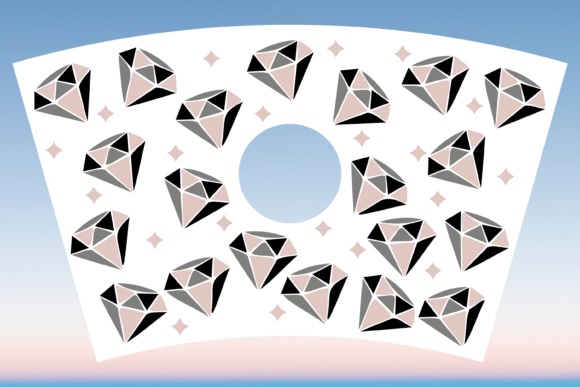
When a design lands on my screen that blends coffee culture, diamond bling, and a full-wrap layout, I immediately start thinking about how it will look on fabric, not just on a tumbler. The Diamonds Gem Starbucks Cup Wrap Svg is marketed as a cutting file or printable, but as a designer who regularly converts digital assets into machine embroidery, my first instinct is to judge its stitchability. The mood is glamorous, unapologetically feminine, and a little playful — a star motif wrapped in a cascade of crystal-like facets, all arranged in a long, panoramic band. It’s the kind of artwork that could easily become a boutique bestseller, but only if it translates cleanly from screen to thread.
First Look: A Celebration of Sparkle and Shape
Opening the file, I saw a continuous wrap design that felt like jewelry for a coffee cup. The diamond elements are repetitive but not boring — each gem catches the eye with faceted angles, and the central star adds a focal point that grounds the entire composition. The layout is clearly designed to circle a 24oz Venti cup, but for embroidery, that elongated banner shape is a gift. It can be reimagined as a horizontal chest design on a sweatshirt, a border along a tote bag, or a striking patch that turns a simple cap into a statement piece. The visual personality is confident, and I immediately pictured a bridal party tote bag or a holiday gift wrap that would make customers pause.
The theme is a bit specific — Starbucks and bling — but that’s what makes it memorable. In a craft business, designs with a clear identity often outsell generic patterns. If you’re an Etsy seller or a small shop owner, a design like this can attract buyers looking for personalized gifts that feel custom and a little indulgent. The Diamonds Gem Starbucks Cup Wrap Svg leans into that “treat yourself” aesthetic, and that’s powerful for product storytelling.
Where This Design Shines in Real Embroidery
I ran through a mental inventory of my usual projects. A custom tote bag for a client’s birthday, a set of embroidered pillows for a coffee lover’s living room, a sweatshirt for a bachelorette weekend — the design fit all of them. The wrap layout works beautifully on items with a long, straight surface, like a kitchen towel or a blanket edge. On a tote bag, aligning the design along the bottom or across the front pocket creates a premium, gift-ready look. For a sweatshirt, placing it across the chest or wrapping around the sleeve adds an unexpected detail that elevates the entire garment.
I also considered how it would behave as a patch. The diamond and star shapes are bold enough to be cut out and stitched with a satin border, making a standalone embroidered patch that could be sold in packs. The contrast between dense fill stitches and the metallic thread I’d choose for the “bling” would give it a tactile, almost jewelry-like finish. In a commercial embroidery setting, designs that can be finished quickly and still look intricate are gold. This one has the potential to be streamlined, but the digitizing step will make or break it.
Fabric, Hoop, and Texture Traps to Avoid
Not every project is a match. I would steer clear of highly textured fabrics like terry cloth or bouclé — the tiny diamond facets would lose definition and turn into muddy blobs. Thin, stretchy fabrics like jersey require extra stabilizer and a careful hooping technique; if the design pulls even slightly, the star could warp and the long band might pucker. Dark fabrics, while dramatic for a bling design, demand high-contrast thread colors. A midnight blue sweatshirt with silver or gold thread would look stunning, but the digitizer needs to account for the background swallowing thin running stitches.
Hoop size is another practical hurdle. The full wrap shape is long. Without knowing the exact dimensions of the Diamonds Gem Starbucks Cup Wrap Svg, I’d guess it needs at least a 5x7 or 6x10 hoop for a single hooping. If you’re working with a 4x4, you’ll need to split the design or scale it down, which could make the diamond details too small to stitch cleanly. I always test on a scrap of the same fabric, with the same stabilizer, before committing to a final product. Tiny details that look crisp on screen can become a nightmare of thread breaks and skipped stitches if the digitized file isn’t optimized.
How It Elevates a Handmade Business
Embedding a design like this into a product instantly adds perceived value. A plain tote bag becomes a “Diamonds & Coffee” themed gift, complete with a story. Customers buying handmade items want to feel they’re getting something special, and the crystal bling motif signals luxury without being stuffy. The recognition factor is another edge — the star and diamond combination is distinct enough to become a signature style for a shop. I’ve seen sellers build entire collections around a single recognizable motif, and this one has that kind of branding potential.
For digital product sellers, the Diamonds Gem Starbucks Cup Wrap Svg can also work as a printable mockup asset. While it’s listed as a Print Templates and Graphics file, using it as a design preview — printed on paper or sublimated — lets you test market interest before committing to embroidery production. That’s a smart, low-risk way to validate a design before investing hours in digitizing and test stitching.
Stitching Clarity: The Devil Is in the Diamonds
The most critical factor here is stitch density. Those diamond facets need to be readable without becoming so dense that the fabric turns stiff. A good digitizer will use a mix of satin stitches for the star and maybe a lighter fill for the diamond fields, with running stitches for the delicate outlines. I’d avoid a single heavy fill across the entire design — it would trap heat and create a bulletproof patch that nobody wants on a soft sweatshirt. Instead, I’d look for a file that uses open stitches or a subtle pattern fill to keep the fabric breathable.
Thread color choice matters immensely. I’d probably stitch a test in black and white first, just to see if the design holds its shape without color distractions. Then I’d experiment with metallic threads for the “crystal” parts — silver, rose gold, or even a holographic thread if the machine can handle it. A tote bag with a metallic diamond design catches the light and looks far more expensive than a plain cotton tote, which is exactly the kind of transformation a craft business owner wants.
Practical Notes from My Design Table
Before I ever let a design near a customer’s order, I run through a checklist. With the Diamonds Gem Starbucks Cup Wrap Svg, these are the steps I’d take:
- Test on scrap fabric first. I can’t stress this enough. Even a design that looks flawless in a preview can behave unexpectedly on different textures.
- Check thread color contrast. Hold the thread spool against both light and dark backgrounds. The diamonds should pop on a dark tote, but on a light cotton pillow cover, you might need a slightly darker shade for the outlines to keep the facets visible.
- Review stitch density. If I’m digitizing myself, I’ll set the fill to a medium density and test for puckering. If I’m buying a pre-digitized embroidery file, I’ll ask the seller for a stitch-out photo.
- Confirm hoop size. Measure the actual design dimensions. A full wrap around a cup is likely over 8 inches wide, so I’d plan for a multi-hooping setup or a large hoop machine.
- Inspect small details. The star’s points and the diamond facets are the most vulnerable. I’d look at the digitized file under a high zoom to see if there are any odd jumps or tiny stitches that could cause thread breaks.
- Test in black and white. A quick printout or a monochrome embroidery sample tells me if the composition stands on its own. If it looks like a blurry mess without color, it’s a red flag.
- Use proper stabilizer. For a tote bag, a cut-away stabilizer is non-negotiable. For a sweatshirt, I’d add a wash-away topper on top of the fleece to keep the stitches from sinking in.
- Check commercial use permissions. The product is an instant digital download, but the listing doesn’t specify embroidery conversion rights. I always contact the designer or read the license terms carefully before using a graphic file for commercial embroidery products. The fact that it’s categorized as Print Templates and Graphics doesn’t automatically mean I can resell it as a finished embroidered item.
A Real-Life Scenario: The Bridal Party Tote
I recently had a client who wanted a set of personalized totes for her bridesmaids. She loved the idea of a coffee-themed design because the group’s inside joke was their morning latte runs. I pulled up the Diamonds Gem Starbucks Cup Wrap Svg and visualized it on a natural canvas tote, stitched in soft gold with a rose gold metallic thread for the diamonds. The star would sit right in the center, and the wrap would curve slightly along the bag’s bottom seam. I’d add each bridesmaid’s name in a delicate script above the star. The result would be a gift that felt custom, luxurious, and utterly shareable on social media.
That’s the kind of project this design is made for — not just a cup wrap, but a multi-purpose asset that can anchor a whole product line. A small shop owner could create a matching set: a tote bag, a zip pouch, and a coffee sleeve, all featuring the same diamond motif. The repetition builds brand recognition, and the bling factor makes each item feel cohesive.
Why This Design Is Worth the Effort
Not every SVG file translates well to embroidery. Some are too delicate, others too reliant on gradient effects that stitches can’t replicate. But the Diamonds Gem Starbucks Cup Wrap Svg has a structural advantage: its shapes are geometric and bold. Diamonds, stars, and a clear band layout are all digitizer-friendly. With a good stitch file, the finished product will look intentional and polished, not like a clumsy conversion. That’s a huge win for anyone selling handmade goods.
I’d save this design for projects where the bling effect can do the heavy lifting — gifts, holiday merchandise, bridal party items, and anything aimed at customers who love a little sparkle. It’s not a design for subtle, minimalist pieces, but it’s not trying to be. It knows its audience, and that confidence translates into a stronger product.
Before you list a finished item or start a production run, make sure you’ve tested the design on the exact fabric you’ll use, with the thread and stabilizer you’ll rely on. A quick stitch-out on a scrap can save you from a customer complaint about peeling diamonds or a star that looks more like a blob. And always, always confirm the usage rights. Digital downloads vary, and what’s permissible for a cutting file may not extend to a finished embroidered patch you sell on Etsy. A little upfront diligence protects your craft business and keeps your creative energy focused on what you do best: making beautiful things with thread.